

Why choose us?
Your Leading STAINLESS STEEL NUTS Supplier
Rich experience
Founded in 1990, the company integrates fastener research and development, foreign trade and professional services.
OEM/ODM
Specializing in the production of high quality and customized hardware standard and non-standard parts.
Higher Quality
Our products are renowned for their superior quality and have obtained ISO and other relevant certificates.
Wide Market
We have successfully won the markets in Eastern Europe, the Middle East, Southeast Asia, Africa and South America.


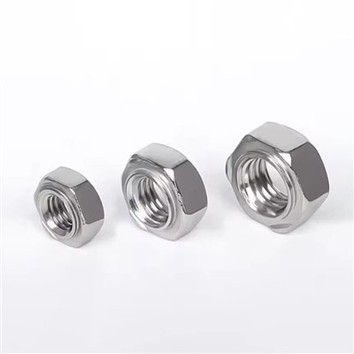


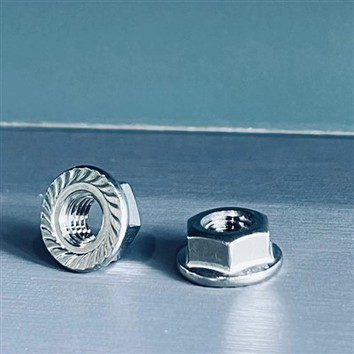

What is Stainless Steel Nuts?
Stainless steel nuts are a fastener consisting of a round internal fitting with external threads that hold two or more pieces together and increase the clamping force. They come in various sizes, shapes, and grades; they are rust-resistant and can withstand high temperatures and heavy pressure. Stainless steel is known for its strength and durability, making it an ideal choice for industrial applications. When properly installed correctly, stainless steel nuts provide a reliable connection that will last long.
Advantages Of Stainless Steel Nuts
Corrosion resistance: Stainless steel nuts are resistant to rust and tarnish, making them ideal for both indoor and outdoor use.
Strength: Stainless steel nuts are very strong and can last for a long time.
Temperature resistance: Stainless steel nuts can withstand high heat and extremely cold temperatures.
Aesthetic appearance: Stainless steel has a bright, easily maintained surface that looks modern and attractive.
Environmental friendliness: Stainless steel nuts are recyclable and environmentally friendly.
Hygiene: Stainless steel is a good choice for industries that require hygiene, precision, and sterility.
Long-term value: Stainless steel nuts have a long-term value.
Types Of Stainless Steel Nuts
Hex Nuts
The most common types of stainless steel nuts are hex nuts, which are standardized with six sides. The unique design allows for the strong grip of a wrench at various angles. The result is excellent convenience, as hard-to-reach places where a wrench can’t turn 360 degrees can be accessed with ease for repairs, installations, and so forth.
Wing Nuts
These are nuts designed with two flat wings on either side and allow for easy tightening or loosening using only fingers. Unfortunately, these are not designed with high strength in mind and are most often utilized where convenience offers more value than strength.
Cap Nuts
These are stainless steel nuts with a dome rather than a flat top. Interestingly, they facilitate aerodynamics which would prove ideal on aircraft and vehicles but is commonly utilized for aesthetic purposes on handrails and steel furnishings.
Square Nuts
Square nuts are four-sided nuts that offer greater resistance to loosening. The reason for this is that the underside has a greater surface area than standard hex nuts and can grip more effectively when fully tightened.
Application Of Stainless Steel Nuts

- Automotive: Used to secure engines and other critical components in assembly lines
- Construction: Used in architectural designs and structural steel connections, especially where corrosion is a concern
- Marine: Used to secure piers and docks, where exposure to saltwater is a concern
- Aerospace: Used in extreme temperature or harsh environments
- Chemical processing: Used in lubricated machinery and chemical processing
- Offshore drilling: Used in offshore drilling
Stainless steel nuts are a popular choice because they are corrosion-resistant, strong, and can last for extended periods. They are also visually appealing.
Application Of Stainless Steel Nuts
Automotive
Used to secure engines and other critical components in assembly lines
Construction
Used in architectural designs and structural steel connections, especially where corrosion is a concern
Marine
Used to secure piers and docks, where exposure to saltwater is a concern
Aerospace
Used in extreme temperature or harsh environments
Chemical processing
Used in lubricated machinery and chemical processing
Offshore drilling
Used in offshore drilling
Stainless steel nuts are a popular choice because they are corrosion-resistant, strong, and can last for extended periods. They are also visually appealing.
Process Of Stainless Steel Nuts
Raw material selection
High-quality stainless steel is chosen based on its strength, quality, and composition.
Heating
The raw material is heated to a high temperature, usually between 1100°C and 1200°C, to make it more malleable.
Forging
The metal is shaped into the desired form using a forging press, which applies pressure through hammering, pressing, or rolling.
Heat treatment
The metal is heated to a high temperature and then rapidly cooled to make it stronger and more durable.
Machining
The metal is machined to the final size and shape of the fastener.

Here are some characteristics of stainless steel nuts
Corrosion resistance
Stainless steel nuts are resistant to corrosion, chemicals, and acids. This makes them suitable for use in harsh environments.
Strength
Stainless steel nuts are durable and strong, withstanding high temperatures and pressure.
Non-magnetic
Many stainless steel nuts are non-magnetic or less magnetic than regular steel nuts.
Grades
There are over 150 grades of stainless steel fasteners, with 304 being the most common commercial grade and 316 being the most common marine grade.
Thread types
Coarse threads are the most common, but fine threads are better for high-tension or high-pressure applications.
Surface finishes
Stainless steel nuts can have different surface finishes, such as plain, zinc-plated, or hot-dip galvanized.
Preventive Measures for Long-Term Maintenance
To minimize future cleaning and extend the life of your stainless steel fasteners, consider these preventive measures:
Regular Cleaning
Establish a regular cleaning schedule, especially for fasteners exposed to outdoor or marine environments.
Proper Storage
Store stainless steel fasteners in a dry environment to prevent exposure to moisture and contaminants.
Avoid Contact with Carbon Steel
If stainless steel fasteners come into contact with carbon steel tools or materials, they can develop surface rust due to contamination.
Protective Coatings
For harsh environments, consider applying a protective coating like Teflon or PTFE to stainless steel fasteners to enhance their corrosion resistance.
Our Certificate


FAQS
Q: Will stainless steel nuts rust?
A: Stainless steel fasteners are often used in highly corrosive environments. When stainless nuts begin to rust, this can occur when hot forged nuts that are manufactured only to a material grade such as 18-8, SS304, and SS316 or to the ASTM A194 Grade 8 or 8M specifications.
Q: Are stainless steel nuts strong?
A: Stainless Steel Nuts serve as a top choice if you require a strong, temperature-resistant, and corrosion-resistant fastener. These nuts find wide-ranging applications across various industries such as construction, automotive, marine, and aerospace, among others.
Q: What are the cons of stainless steel bolts?
A: Lacks strength and hardness — Stainless steel is not a very hard or strong fastener material. While it's great for low-stress applications, a different option should be used if you need boosted durability.
Q: Will stainless steel eventually rust?
A: Stainless steel is naturally corrosion-resistant, but it is not immune to rust. While it is less prone to rusting than conventional steels, exposure to damaging chemicals, saline, grease, moisture, or heat for extended periods of time can cause corrosion.
Q: How long do stainless steel bolts last?
A: Fixfast stainless steel fasteners and washers would generally be expected to remain in a serviceable condition for 60 years or more when installed in standard or test circumstances. In both cases, this lifespan relates only to fasteners that have been installed in conditions suited to the material being used
Q: What grade are stainless steel nuts?
A: 303 and 304 Stainless are the most commonly listed grades, the standard grade for stainless fasteners. They are corrosion-resistant and durable. They are often used in marine applications in freshwater environments but will not work as effectively in a salt-water environment as 316 stainless.
Q: Does stainless steel go bad?
A: Some types of stainless steel are more prone to corrosion than others, depending on the chromium content. The higher the chromium content, the less likely the metal will rust. But, over time and if not maintained correctly, rust can and will develop on stainless steel.
As one of the leading stainless steel nuts manufacturers and suppliers in China, we warmly welcome you to buy stainless steel nuts for sale here and get free sample from our factory. All customized products are with high quality and low price.
Square U Bolt, SS Hex Socket Bolt, Hex Washer Head Tapping Screw