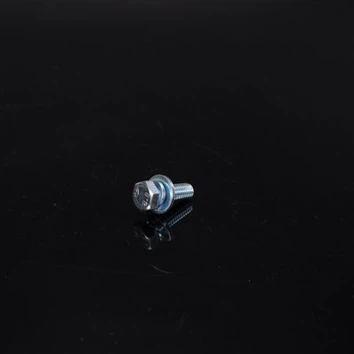
Bolts

China Bolts Manufacturers Factory Suppliers


We specialize in producing all kinds of Bolts products, mainly Carbon Steel Bolt, Stainless Steel Bolt, Threaded Studs , U Bolt, T Head Bolt, Roof Bolt, Insulator Stud Set, Hex Flange Bolt, Stainless Steel Pin Bolt, SS Mushroom Head Bolt, SS Hex Socket Bolt, SS Hex Flange Bolt, SS Hex Bolt Of Big Size, etc.
Haiyan Gete Hardware Co.,Ltd. was established in 2014. After years of operation, it has mature technical expertise, advanced process equipment, extensive production experience, and a complete service system.
We have established long-term cooperative relationships with customers around the world, allowing customers around the world to buy high-quality products and enjoy excellent customer service.


Company Advantages


Well-Experienced
Haiyan Gete Hardware Co.,Ltd was established in 2014, with more than 10 years of manufacturing experience, creating many successful cases and can provide customers with perfect solutions. Our fastener and hardware business improves year by year in Europe and North American market.
Professional Team
We have hundreds of professional and technical personnel, and we can provide you with professional services. Professional engineers also can provide expertise consultations and professional advice on product selection and maintenance. Firmly supported by a fully experienced sales and engineering team, we can assist you in finding the exact hardware and fastener products you plan to purchase.
Competitive Pricing
We offer competitively priced for our products, ensuring that we can offer our customers a high-quality solution without breaking the bank. We also can offer different discounts based on your order quantity.
Quality Assurance
We adhere to stringent quality control measures to ensure that our products meet and exceed industry standards. Our fasteners are manufactured using premium materials and undergo rigorous testing to guarantee their durability, strength, and reliability in diverse operating conditions.
Customized Services
We offer customization options for our fasteners, including variations in size, material, and finish. This flexibility allows us to tailor our products to specific project needs, ensuring optimal performance and compatibility and our team is capable of developing new products or providing technical solutions tailored to customer requirements. If you have any special request, please send us the details.
Expansive Market Reach

With an experienced and professional team, we have exported our products to many countries and regions all over the world. Our products sell well in mainstream markets such as Europe, North America, Japan, South America, Oceania, and Asia. We have established long-term cooperative relationships with customers around the world.

First 1234567 Last 1/7
Roof Bolt


Introduction to Bolts

Bolts are tools used to fasten and secure the faces of assemblies. They are threaded and come with a matching nut. Their purpose is to connect aligned unthreaded holes by being placed through the aligned holes and secured with the bolt's nut.
While there are many types of bolts and their designs vary, most bolts have the same general features. They have a threaded cylindrical rod, along with a head at one end and, usually, a nut at the other. Bolt heads are normally larger than their bodies, which is a design that helps distribute the load of the object being fastened over a larger area. The associated nut is used to secure the joined objects in place. Bolts are used for many applications, with construction, manufacturing, and automotive industries being the most common.
Bolts often rely on axial force causing sufficient friction at the threads to remain in place. A torque is applied to the head to generate this axial force. The force acts between the bolt head and whatever the bolt is screwed into, whether that is a nut or one of the parts being fastened. This causes elongation of the bolt and compression of the parts containing clearance holes. Alternatively some form of locking nut or thread-locking adhesive may be used to prevent the bolt from loosening.


Advantages of Bolts

No Effect Of Failure: If the bolted joint is failed at a point that does not affect whole connection like riveted joint and welded joint.

Simple Design: The bolted joint having simple design, which helps to identify the joints are easy than welded joint or riveted joint.

Easy Operation: The bolted joint is a simple joint so that the operation of the bolted joint is easy.

High Strength Joint: The strength of the bolt joint is higher than riveted joint. Bolted joint required less number of bolts for the same strength are getting from riveted joint.

Low Cost: The cost of bolted joint is less compared to riveted joint and also it required less number of equipments so that, the cost of equipments is decrease.

Low Noise: The operation of bolted joint is less noisy. At the time of tightening the bolt and nut operation is silent and compared to a riveted joint.

Less Skilled Or Semi Skilled Labour Required: Due to simple in operation of bolted joint To perform the operation less skilled or semi skilled workers are required so that the cost of skilled worker is decreased.

Less Man Power Required: Due to easy operation the manpower required for connection of bolted joint is a less compared to a riveted joint or welded joint.

Availability: The part of bolted joint are easily available compared to riveted or welded joint.

Non Permanent Joint: Bolted joint considered as a non permanent joint because of non permanent joint it can easily assemble and disassemble.

Less Time Required: To perform the operation of bolted joint the time required for it is very less compared to riveted joint of welded joint and riveted joint.

No risk: Bolted joint is considered as a cold process type joint. so that there is no risk of any type of heating during operation of a joint.

Replacement Is Easy: In a bolted joint, the bolt is easily removed or replaced at the time of failure of joint.


Types of Bolts
 
 
Carbon Steel Bolt

A carbon steel bolt is a type of fastener made from steel that contains carbon up to 2.1% of its weight. Carbon steel bolts are commonly used in construction, manufacturing, automotive, and infrastructure industries.
Carbon steel bolts are strong, durable, and cost-effective compared to stainless steel. They are also easily machined and respond well to heat-treatments. Carbon steel bolts are made in three subtypes: low-carbon, medium-carbon, and high-carbon. The standard grades for carbon-steel based screws and bolts are 2, 5, and 8.

 
Stainless Steel Bolt

A stainless steel bolt is a threaded rod with a head that is designed to be turned with pliers or a wrench. Stainless steel bolts are strong, durable, and corrosion resistant. They are often used in high-strength applications.
Stainless steel bolts are used in a variety of applications where strength and durability are required. They are especially well-suited for use in corrosive environments. Stainless steel is an alloy that contains chromium, which provides excellent resistance to rust and corrosion.

 
U Bolt

A U-bolt is a round, threaded bar that is bent into the shape of a U. It has two threaded arms, or legs, that extend from a curved base. U-bolts are industrial fasteners that are used to fasten pipes or tubes to a surface.
U-bolts are commonly classified by bending shape and can be divided into round, semi-round, and square U bolts. The U-bolt grade is a measure of the material's strength. Grades 5 and 8 are the most commonly used, with grade 8 material offering an increase in yield strength of over 40% better than that of grade 5 material.


Applications of Bolts
  • High load-bearing requirements: Typically used in applications where there's a significant load or stress that needs to be supported. They're ideal for situations where strength and stability are paramount.
  • Applications: Construction, oil & gas pipes, heavy machinery
  • Adjustability: Easy adjustability since they're used in combination with nuts. If you need to fine-tune the tension or alignment of parts, bolts are a better choice.
  • Applications: Automotive suspension systems, conveyor systems
  • Disassembly and maintenance: Suitable for applications where disassembly for maintenance, repair, or future modifications is necessary. You can simply remove the nut to disassemble the components.
SS Hex Bolt Of Big Size


SS Hex Flange Bolt


Anatomy of Bolt

Understanding the anatomy of a bolt will help you choose what you need.

  • Thread: The helical ridges that spiral around the body and engages with the nut.
  • Runout: The point on the bolt that "runs out" of thread and where the shank begins.
  • Shank: The smooth, threadless part of the bolt.
  • Radius: The curve between the shank and the head.
  • Head: The part of the bolt that a torque tool can hold for tightening or loosening.
  • Thread length: The length of the thread, which varies according to its intended purpose.


Certifications


We have various technical certifications incorporate: GB, DIN, ISO, ANSI/ASTM, BS, BSW, JIS . The quality of our products is highly praised by customers.

productcate-1-1
productcate-1-1
productcate-1-1
productcate-1-1
productcate-1-1


Products Description
 

We have a fully automatic CNC production line, and are committed to providing customers with the best products and services.

productcate-1-1
productcate-1-1


productcate-1-1


Frequently Asked Questions
 

Q: How Is a Bolt Made?

A: There are three overarching ways to manufacture bolts: cold forming, hot forging, and machining.
Cold forming is the process of forming a bolt without heating up the material. It's accomplished by striking or pressing the material in a die to create desired dimensions.
Hot forging is the process of heating up material to a point where it becomes malleable, then forming it in a die.
Machining is the process of using machinery to cut away material until it fits desired dimensions.

Q: How to choose the right nut for your bolt?

A: Nuts and bolts fasten together with their threads. The weakest shear plane in the thread profile is where failure can start. That is, the weakest material determines the strength of the connection. The point is, nuts and bolts should be made of the same alloys. Not only that, but your nut should meet or exceed the maximum tensile strength of the bolt, which is the amount of pull the bolt can withstand.

Q: Why use washers with nuts and bolts?

A: Bolts are designed to work with a nut and two washers. When paired with a nut and washers, they generate a clamping force by distributing the load across the washer's face and material when the nut is threaded on. This helps secure the connection over a larger surface area and helps prevent the bolt and nut from damaging the material or possible pull through.
Washers evenly distribute the nut's load and protect the surface that you're fastening from damage. It also gives your nut a smooth surface to push against, which helps the fasteners remain tight instead of loosening. In a few cases, you'll need to put the washer on the bolt side, but only if it's the bolt that requires turning.

Q: How to measure bolt length?

A: If the bolt's head will sit above the surface to which it's installed, then measure the nominal length. If the bolt's head is countersunk – meaning, it will sit flush to the surface – then measure from the top of the head to the end of the bolt.

Q: How To Decide When To Use Bolts Instead Of Screws?

A: Before choosing a side in the bolts vs. screws debate for your next project, think about these three factors:
APPLICATION:
Your project is the biggest factor in whether you use screws or bolts. Remember: bolts provide a tremendous amount of holding strength whereas screws offer a middle-ground for holding power. Light to medium construction projects, like for fencing or framing, are best for screws. Your heavy-duty projects are best for bolts. Bolts are also best when the finished project is meant to be assembled and disassembled easily.
MATERIAL:
Whether you're using sheet metal, wood, concrete or drywall for your DIY undertaking, you want to think about how it applies to bolts vs. screws.
There are some materials that could require either a screw or a bolt assembly for fastening. For example, a 2"x 4"might be best fastened as a stud that is part of the framework for a wall using screws, but for an application like a deck assembly, bolts are likely a better choice. Be sure to consider the load being put on the fastener in combination with the material when choosing between bolts and screws.
COST:
Price is always a factor when budgeting a project, especially if you're going to need a large number of fasteners. While using bolts can be more costly, using the correct fastener will save you money in the long run. If you end up having to do repairs on the project because you used the wrong fastener for the material or application, you aren't really saving any money by going the cheaper route.

Q: What Is The Difference Between A Bolt And A Screw?

A: Bolts And Screws Can Both Provide a Secure Hold In Fastening Applications. However, these fasteners are not the same. Usually self-tapping, a screw features a helical groove wrapped around a shaft. The threads of the screw mate with the material it is turned through to hold the screw in place. A bolt, on the other hand, is not self-tapping and requires a nut to stay secure.
Screws and bolts also differ in shape and cost — screws are often tapered, while bolts are not, and bolts tend to cost more than screws.

Q: Is A Bolt Stronger Than A Screw?

A: Yes, bolts provide greater holding strength than screws. This is partly due to the presence of the washer, which spreads out the load over a larger surface area. Because bolts offer increased strength, they work well for heavy-duty, load-bearing applications.

Q: What Do You Call A Bolt Without A Head?

A: There Are Several Types Of Bolts That Lack The Head Found On Typical Designs. A Hanger Bolt Has Two Threaded Ends, With One End Shaped Like a Wood Screw. You Might Use One Of These Fasteners If You Want To Secure Something Overhead Or Fasten Metal To Wood. Another Bolt Without a Head Is Called a Stud Bolt. You Can Use These Fully Threaded Fasteners To Create Flange Connections With Nuts On Either Side Of The Bolt.

Q: What Is The Difference Between A Bolt And A Hex Head Cap Screw?

A: Bolts look similar to hex head cap screws. The main difference between them has to do with how you install them. A bolt works in tandem with a nut to secure objects or materials together. To install a cap screw, you need to turn the screw inside a tapped hole.

Q: What are the Differences Between Carbon Steel Bolts and Stainless Steel Bolts?

A: 1. The Material is Different:
The corrosion resistance of stainless steel decreases as the carbon content increases, so most stainless steels have a low carbon content, up to a maximum of 1.2%.
The main alloying element in stainless steel is Cr (chromium). And only when the Cr content reaches a certain value, the corrosion resistance can be obtained. Therefore, the content of Cr in stainless steel is at least 10.5%.
In addition, stainless steel also contains elements such as Ni, Ti, Mn, N, Si, Cu, Nb, and Mo.
2. The Use Environment is Different:
Stainless steel bolts and carbon steel bolts are used in different environments. Because the corrosion resistance of stainless steel bolts is much higher than that of carbon steel bolts. Therefore, some industries with special requirements, especially those with high safety requirements, as well as some occasions with exposure to sunlight, high temperature, low temperature, and high corrosiveness, need to use stainless steel, such as some medical equipment and food equipment.
Relatively speaking, carbon steel bolts are generally used in more conventional occasions, such as furniture and building materials.
3. The Cost is Different:
Stainless steel is more expensive than carbon steel, but it is more durable than carbon steel, not easy to rust, is more resistant to high and low temperatures and corrosion, and has more advantages. The cost of carbon steel is lower. Although carbon steel is inferior to stainless steel in corrosion resistance and other aspects, it is easy to smelt and has good processability.
4. Magnetic Difference:
The surface of carbon steel is magnetic and can be attracted by magnets.
Whether or not stainless steel is magnetic depends on the different stainless steel categories. The metallographic structure of stainless steel determines whether it is magnetic. Among them, ferritic (F) type stainless steel and martensitic (M) type stainless steel are magnetic, and austenitic (A) type stainless steel is non-magnetic.
5. Different Colors:
Stainless steel contains a lot of chromium and nickel, and its appearance is silver and bright.
Carbon steel is mainly carbon and iron alloys, and other metal elements are relatively few. The main color of the exterior is the color of iron, and the color will be much darker.

Q: What are U-bolts used for?

A: U-bolts have many uses, including:
Support: U-bolts can support pipework or attach parts to walls, beams, or poles. The "U" shape keeps the part firmly in place and adds stability.
Restraint and guide: U-bolts can keep pipes from moving, banging into other structures, and wearing down. They can also keep pipes secure during shipping and limit vibrations when hanging pipes.
Reduce thermal movement: U-bolts can keep pipes secure amid wind, earthquakes, or other outside forces.
Secure leaf springs: U-bolts can be used to secure leaf springs, ring bolts, and shackles.

Q: Why Use a Bolt Instead of a Screw?

A: Bolts have several advantages over screws in certain circumstances. A bolt provides greater strength, versatility, and ease of disassembly compared to screws, making them an exceptional choice for many applications.
For example, bolts are typically more durable than screws and can withstand greater levels of strain and tension, rendering them a superior option for situations where the fastener will bear significant weight or pressure.
Bolts can also be used in scenarios where two or more objects must be attached, but they have not been pre-drilled. By using a bolt, it is possible to drill a hole through both objects and secure them together using a nut and washer. They are also frequently used when disassembling objects is necessary later on. If a screw is in a hard-to-reach location, unscrewing it from the top can be challenging. With a bolt, on the other hand, you can quickly loosen the nut and remove the bolt.

Q: Are stainless steel bolts rust proof?

A: Yes, stainless steel bolts are (mostly) rust proof. The chromium in stainless steel forms a barrier that prevents oxygen and water from reaching the steel beneath. This barrier also makes stainless steel resistant to corrosion.

Q: Is a Bolt Stronger Than a Screw?

A: In general, bolts are stronger than screws. Bolts are designed to withstand higher levels of stress and tension than screws. However, some screws are designed to be very strong, such as lag screws, which can be used in applications where a high level of strength is required.

Q: What markings on stainless steel bolts?

A: The markings on stainless steel bolts indicate the type of stainless steel that was used to create the bolt. For example, a bolt with the markings "304" indicates that the bolt is made from 304 stainless steel. This is a common type of stainless steel that is often used in applications where corrosion resistance is important.

Q: When do you need to use Bolts?

A: You would want to use bolts when:
The objects that are fastened, require frequent dismantling and reassembly.
When the objects that are fastened, are made of a material which is too weak or thin to make screw threads in.
The objects that are fastened have medium thickness. For example, beams, flanges or plates, etc.
When there is a place available for bolt head and nut.

As one of the leading bolts manufacturers and suppliers in China, we warmly welcome you to buy bolts for sale here and get free sample from our factory. All customized products are with high quality and low price.

SS Hex Head Wood Screw, Chipboard Screw, HDG U Bolt