

China Screws Manufacturers Factory Suppliers
We specialize in producing all kinds of Screws products, mainly Decking Screw, Machine Screw, Self Drilling Screw, Self Tapping Screw, Wood Screw, Stainless Steel Screws, Concrete Screw, Chipboard Screw, Bugle Head Decking Screw, Truss Head Self Drilling Screw, Pan Head Tapping Screw, Slotted Wood Screw, Hex Head Wood Screw, SS Hex Head Wood Screw, etc.
Haiyan Gete Hardware Co.,Ltd. was established in 2014. After years of operation, it has mature technical expertise, advanced process equipment, extensive production experience, and a complete service system.
We have established long-term cooperative relationships with customers around the world, allowing customers around the world to buy high-quality products and enjoy excellent customer service.
Well-Experienced
Haiyan Gete Hardware Co.,Ltd was established in 2014, with more than 10 years of manufacturing experience, creating many successful cases and can provide customers with perfect solutions. Our fastener and hardware business improves year by year in Europe and North American market.
Professional Team
We have hundreds of professional and technical personnel, and we can provide you with professional services. Professional engineers also can provide expertise consultations and professional advice on product selection and maintenance. Firmly supported by a fully experienced sales and engineering team, we can assist you in finding the exact hardware and fastener products you plan to purchase.
Competitive Pricing
We offer competitively priced for our products, ensuring that we can offer our customers a high-quality solution without breaking the bank. We also can offer different discounts based on your order quantity.
Quality Assurance
We adhere to stringent quality control measures to ensure that our products meet and exceed industry standards. Our fasteners are manufactured using premium materials and undergo rigorous testing to guarantee their durability, strength, and reliability in diverse operating conditions.
Customized Services
We offer customization options for our fasteners, including variations in size, material, and finish. This flexibility allows us to tailor our products to specific project needs, ensuring optimal performance and compatibility and our team is capable of developing new products or providing technical solutions tailored to customer requirements. If you have any special request, please send us the details.
Expansive Market Reach
With an experienced and professional team, we have exported our products to many countries and regions all over the world. Our products sell well in mainstream markets such as Europe, North America, Japan, South America, Oceania, and Asia. We have established long-term cooperative relationships with customers around the world.


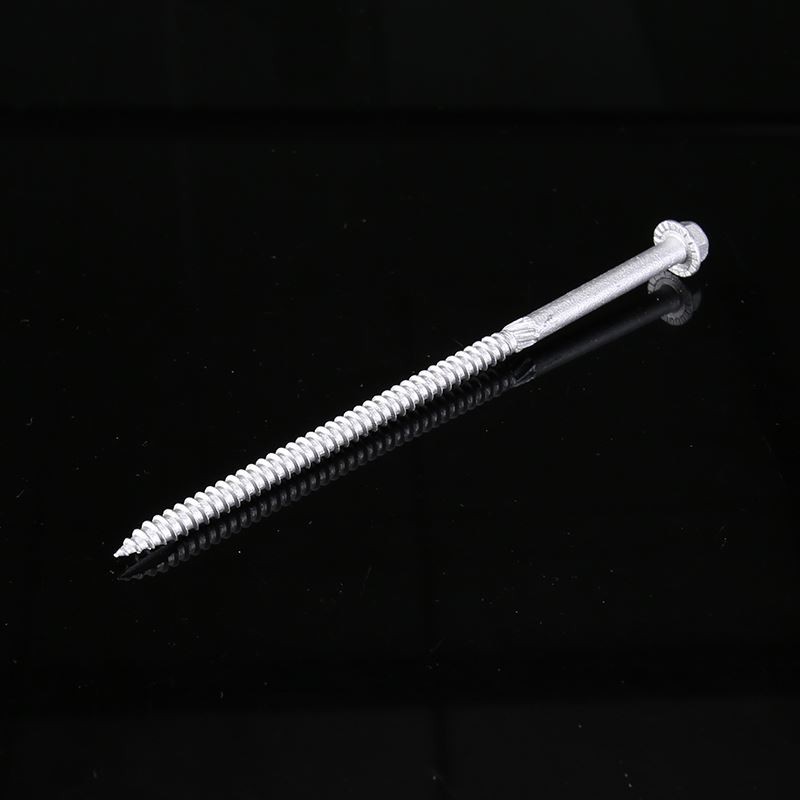
A screw is a broad category of mechanical fastener with a threaded shaft, designed to screw into a part. This includes wood screws and self-topping screws, which have a tapered shaft with sharp threads designed to cut a mating thread in the part to which they are fastened. It also includes machine screws, which much more closely resemble bolts, but their entire shaft is normally threaded.
A screw is that attributes its mechanical capabilities to the helical groove that extends around the circumference of the device's shank. These threads provide the friction and traction that serves a screw's purpose: to assemble or position two workpieces in relation to each other.
Screws come in many varieties. The external threads on the screw can either mate with an internally threaded nut or hole, or cut its way into a soft material. Screws are inserted via torque applied--in a clockwise manner--to the head with a screw drive.

Advantages of Screws



A Mechanical Edge
When you choose screws, you get a mechanical advantage in the process. Driving in a screw uses less energy when compared to hammering in a nail into the same material. So for those using hand tools, then the project instantaneously easier when screws are used. And the same goes for the use of power tools, which require less force and place less strain on the tool's motor.
Extra Strength & Long-Lasting Hold
Screws are very strong and are built to last. This is a stark contrast to nails, which may come loose over time. This happens when the materials they connect with begin to expand and shrink over time. Screws are built to resist this problem. Their hold is longer-lasting and stronger. And since screws are so strong, there is less of a worry about the durability and hold. So it gives the material more of a piece of mind when done.
Rust Resistant
Since screws offer a strong and tight bond with their adjoining material, this makes them less susceptible to rusting. The tight hold prevents moisture and contaminant from coming into contact with the screw's shaft, thus preserving it for a long-lasting hold. So, even if the head of the screw begins to rust, the shaft will remain intact and hold due to this preservation. This advantage makes screws a much better choice than nails for a long-term hold.
Advantages of ScrewsMany Different Sizes & Shapes
There are many different sizes and shapes for screws and they come with varying thread patterns. So you can get one specifically designed for use on wood, drywall, sheet metal, concrete, or more. When you use the proper screw type, it improves the long-term use of a screw. Screws also utilize different types of heads, which makes them suitable for use with different types of tools. And thus, easier to complete a job, since you have more tools at your disposal to use.
Easy to Remove
When it comes to removal, there is no fastener that is easier than screws. Of course, you can remove nails and staples. However, you likely need a special tool to get them out. With a screw, they back out of their slots with the same tool that drove them in. So you don't need to go looking for a different tool and can save that time working.
Reuse Screws
Due to the strength and longevity of screws, you can reuse them more when compared to nails. They seldom bend during the removal, so they can be reused for another application. You can also reinsert them into the same hole without sacrificing strength.
Types of Screws
Decking Screw
Decking Screws are ideal for outdoor projects, particularly for securing decking boards but they can also be used for a whole host of outdoor woodworking tasks such as cladding, fencing, doors, gates and much more. They are designed to withstand exposure to weather elements and offer superior corrosion resistance.
Machine Screw
A machine screw is similar to a bolt and has a diameter of 0.75 inches or less. Due to their size restriction, established by the American Society of Mechanical Engineers (ASME), machine screws are smaller than other types of screws. When joining or connecting two pieces of metal, machine screws are inserted into threaded holes. The size of the threads, helical ridges, remain the same from the top of the screw to the tip.
Self Drilling Screw
Self drilling screws create internal threading when they are installed. They are fully threaded from the tip to the head, with threads that are harder and more rigid than the materials they are joining. Self drilling screws have a variety of tips in unique shapes. Notched tips or drill bit tips can easily be installed and create their own space in the substrate.
Self Tapping Screw
Self-tapping screws is a term generally used for screws designed to cut their own thread in sheet metal, although in a general sense wood and plastic screws are also self-tapping. These types of screws often have a sharp pointed end and sharp threads on a tapered shaft. They may have a section of unthreaded shank, like a bolt.
Wood Screw
Wood screws are designed to join pieces of wood and made of various types of metals. They have a tip, threads, head, and shank with the shank being partially threaded with the threads covering three fourths of the body of the screw. The partial design is common but not the only type of wood screw since there are wood screws with the shank completely threaded to the head.
Stainless Steel Screws
Stainless steel screws are strong, durable, and resistant to rust, corrosion, heat, cold, and water. They are made from iron and alloy elements like chromium, nickel, molybdenum, and other molecules.
Stainless steel screws are a popular choice for outdoor projects because of their weather-resistant qualities. They are used in many applications, including: Building decks, Outdoor furniture, Sheds, Lawn decorations.
Stainless steel screws are 100% recyclable and have an excellent life cycle. When installed in standard or test circumstances, stainless steel fasteners and washers would generally be expected to remain in a serviceable condition for 60 years or more.

Fastening into threads: Machine screws thread into pre tapped holes of compatible thread size. Self-tapping screws are designed to cut their own threads in a pre-drilled, untapped hole. Applications: electronics assembly, automotive manufacturing, woodworking
Convenience and speed: Faster and easier to install since they don't require a separate nut. This makes them suitable for applications where efficiency matters. Applications: Assembly line manufacturing, sheet metal fabrication
Smaller or lighter loads/non-structural applications: Screws don't require nuts and are suitable for lighter load-bearing applications where the load is not significant, such as securing small components, fastening electronics, or assembling furniture. Applications: Consumer appliances, electronic devices, furniture assembly
Materials with low shear strength: Suitable for materials with lower shear strength, such as plastic or particleboard, where they can create strong connections. Applications: Plastic enclosures, cabinetry, furniture
What are the Parts of a Screw
The Tip
The pointed end of a screw is known as the tip. Most screws have a sharp and pointed tip that's able to bore a hole into surfaces. The tip is usually narrower than the rest of the screw. This allows it to penetrate otherwise hard materials. Without a tip — or with a wide tip — a screw may struggle to penetrate hard materials. The tip often changes depending on what material the screw is intended to be used on.
The Threading
Threading is the section of a screw that contains helical ridges. Screws rely on this threading to remove material from the surfaces into which they are driven. The threading essentially scoops out material as the screw is driven into a surface. When a screw is driven into a surface, it will displace some of the surface's material. The material will enter the helical ridges where it travels up and out of the surface.
The Shank
Screws also have a shank. For wood screws, the shank is the unthreaded portion that's found above the threaded portion. Wood screws have an unthreaded shank to create a stronger and more secure hold. With only part of a wood screw being threaded, it offers a stronger hold than that of traditional screws with complete threading from top to bottom. Other types of screws have a fully threaded shank, meaning the threading extends all the way from the head to the tip. Wood screws are different because they almost always have an unthreaded shank.
The Head
Finally, the head is the top section of a screw. There are two types of screw heads: traditional and counter-sunk. Counter-sunk heads are intended to rest flush with the surface into which they are driven. In comparison, traditional screw heads protrude out of the surface into which they are driven. Both traditional and counter-sunk screw heads feature one or more notches, which are designed to support the use of a screwdriver. To drive a screw into a surface, you must press the screwdriver into these notches, after which you can turn the screwdriver.
The Drive
When people ask "Flat head of Philips head?", they are actually referring to the type of drive not the head of the screw. The drive is a crucial component of the screw as it determines what type of screwdriver needs to be used to install the screw.
Certifications
We have various technical certifications incorporate: GB, DIN, ISO, ANSI/ASTM, BS, BSW, JIS . The quality of our products is highly praised by customers.


Products Description
We have a fully automatic CNC production line, and are committed to providing customers with the best products and services.



Frequently Asked Questions
As one of the leading screws manufacturers and suppliers in China, we warmly welcome you to buy screws for sale here and get free sample from our factory. All customized products are with high quality and low price.
Stainless Steel Chipboard Screw with Phillips Or Torx Drive, Insulator Stud Set, Painted Head Hex Washer Head Self Drilling Screw and Tapping Screws