

The material selection of standard parts is crucial to their performance and use. Since different applications may require different material usage standards, there are mainly three standard parts materials available on the market: carbon steel, stainless steel and copper.
These three materials - carbon steel, stainless steel and copper, each have unique properties and applications. Carbon steel stands out for its high strength, high hardness, excellent wear resistance and good plasticity, while its manufacturing cost is relatively low. These advantages make carbon steel an ideal choice for manufacturing standard parts, especially products such as bolts and nuts.
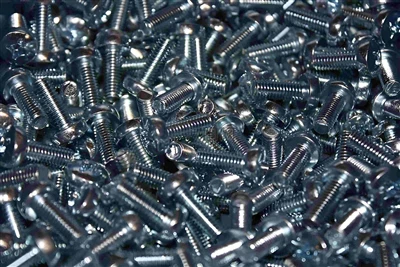
Stainless steel:
Stainless steel has a variety of performance grades, including 70 and 80, covering a variety of types such as austenite, martensite and ferrite. Austenitic stainless steel, with its 18% chromium and 8% nickel content, shows excellent heat resistance, corrosion resistance and weldability, and is widely used in various occasions. Martensitic stainless steel, such as AA2 and A4, and 13% chromium content, although slightly less corrosion resistance, has high strength and good wear resistance, and also has its unique value in specific fields. Ferritic stainless steel, such as CC2 and C4, and 18% chromium content, have good forging properties and better corrosion resistance than martensitic stainless steel.
Stainless steel materials are widely circulated in the market, among which imported materials are mainly Japanese products, and can be divided into SUS302, SUS304 and SUS316 according to grades. These stainless steel materials all show excellent corrosion resistance, can remain stable for a long time in various harsh environments, and are not easy to rust.
At the same time, they also have the characteristics of high strength, high aesthetics and easy processing, making stainless steel an ideal choice for manufacturing many products.
Copper:
Copper, as an important metal material, is widely circulated in the market. Among them, brass is highly respected for its superior performance. Brass, that is, zinc-copper alloy, is a kind of copper-based alloy with excellent electrical conductivity, thermal conductivity, corrosion resistance and processing properties. Copper plays an indispensable role in the fields of power transmission, motor manufacturing, etc. At the same time, copper also has good weldability and brazing properties, which further broadens its application range.
In the market, copper materials such as HHH68 are widely used as standard parts to meet the needs of different fields.
Analysis of the differences between stainless steel and carbon steel
Stainless steel and carbon steel, two steel materials, are often confused in daily use. However, there are many differences between them. Next, we will explore these differences one by one.
First, the thermal conductivity of stainless steel is worse than that of ordinary low-carbon steel, and its elongation is also lower, which requires greater deformation force during processing.
Secondly, when bending, stainless steel plates will show a strong tendency to rebound, which is a significant difference compared with carbon steel plates. In addition, due to the low elongation of stainless steel plates, a larger workpiece bending angle R is required when bending to avoid cracks.
Finally, the hardness of stainless steel plates is higher and the cold work hardening effect is obvious, which requires that when selecting press bending tools, tool steel with a heat treatment hardness of more than 60HRC should be selected, and its surface roughness should be appropriate.
Through these analyses, we can see the differences between stainless steel and carbon steel more clearly.