

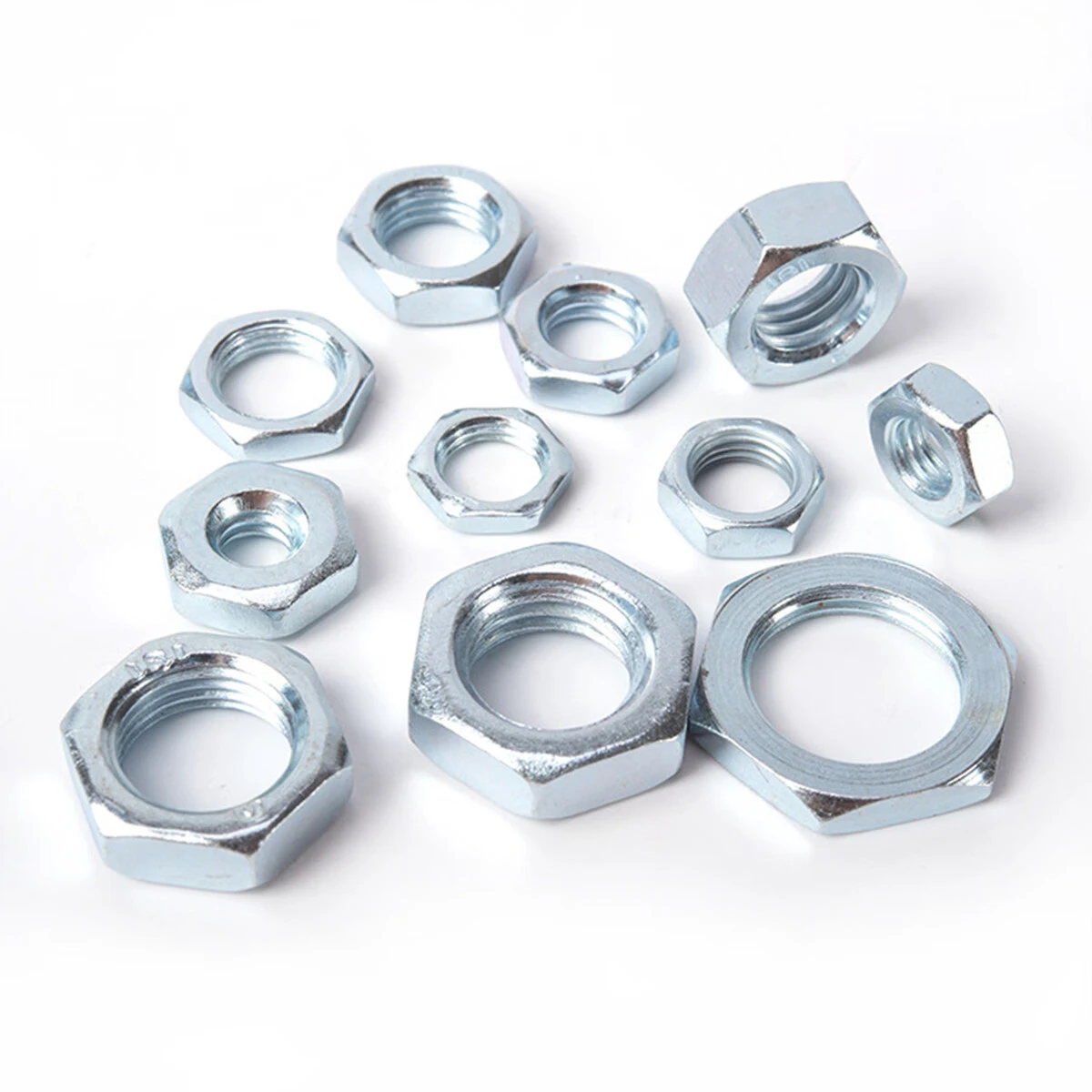
The main differences between DIN439 hexagonal thin nuts and DIN934 hexagonal nuts are as follows:
Thickness and Dimensions: The thickness of DIN439 nuts is significantly less than that of DIN934 nuts of the same size. For example, for M10 size, the thickness of DIN439 may be only about 60%-70% of that of DIN934. This thin design saves space but has lower load-bearing capacity.
Application Scenarios: Due to their smaller thickness and lighter weight, DIN439 nuts are often used in precision instruments, thin-walled structures, or applications requiring frequent disassembly; DIN934 nuts are more general-purpose, with Class C suitable for rough surfaces, and Classes A/B used for mechanical connections requiring higher precision.
Strength and Precision: DIN934 nuts (especially Classes A/B) usually have stricter tolerance control, suitable for high-precision requirements; DIN439 nuts, due to their thin design, have weaker shear resistance and anti-loosening capabilities, and are generally used for low-load or non-critical connections.
Interchangeability: The two are not directly interchangeable, as the difference in thickness can lead to compatibility problems. For example, if there is insufficient installation space for a DIN439 nut, a DIN934 nut may not fit.
Selection Advice: When choosing, you need to decide based on space limitations, load requirements, and precision standards: if space is limited or lightweight design is required, prioritize DIN439; if you are looking for versatility and high reliability, DIN934 is more suitable. In practical applications, the specific specification table should be checked to avoid errors.