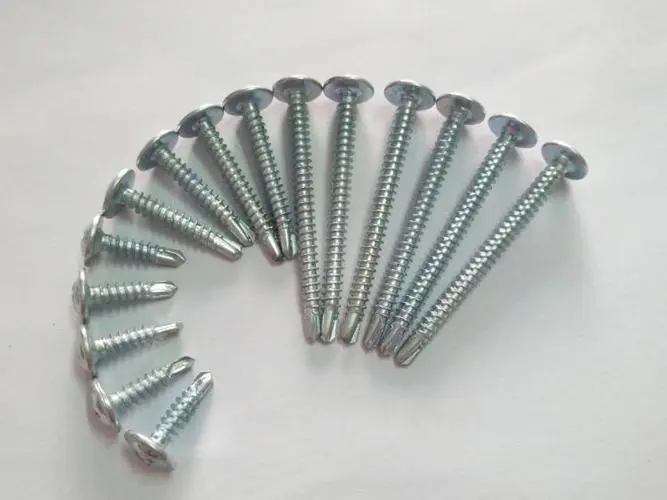
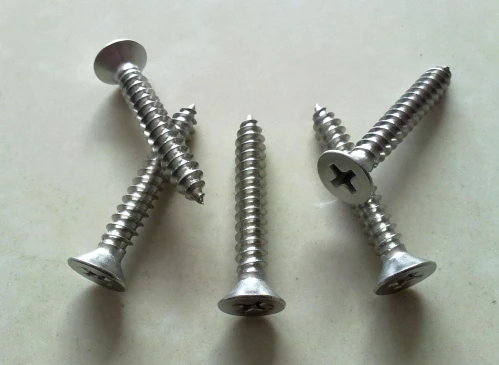
The main reason is that the external hexagonal head has a large stress area and can withstand a large installation torque. However, when installing self-drilling and self-tapping screws, you need to rely on the "pointed tail" of the thread to drill the holes yourself, which is very difficult when installing at high speed with electric installation tools. The screw head may be broken due to over-torque. Therefore, the head form of the self-drilling and self-tapping screw is designed as a hexagonal flange or hexagonal flange. The contact area between the flange and the flange is larger. When the screw is installed in place, it is easier to detect and stop applying torque in time.